| Generic Name: |
Vitamin B Complex
|
| Composition: |
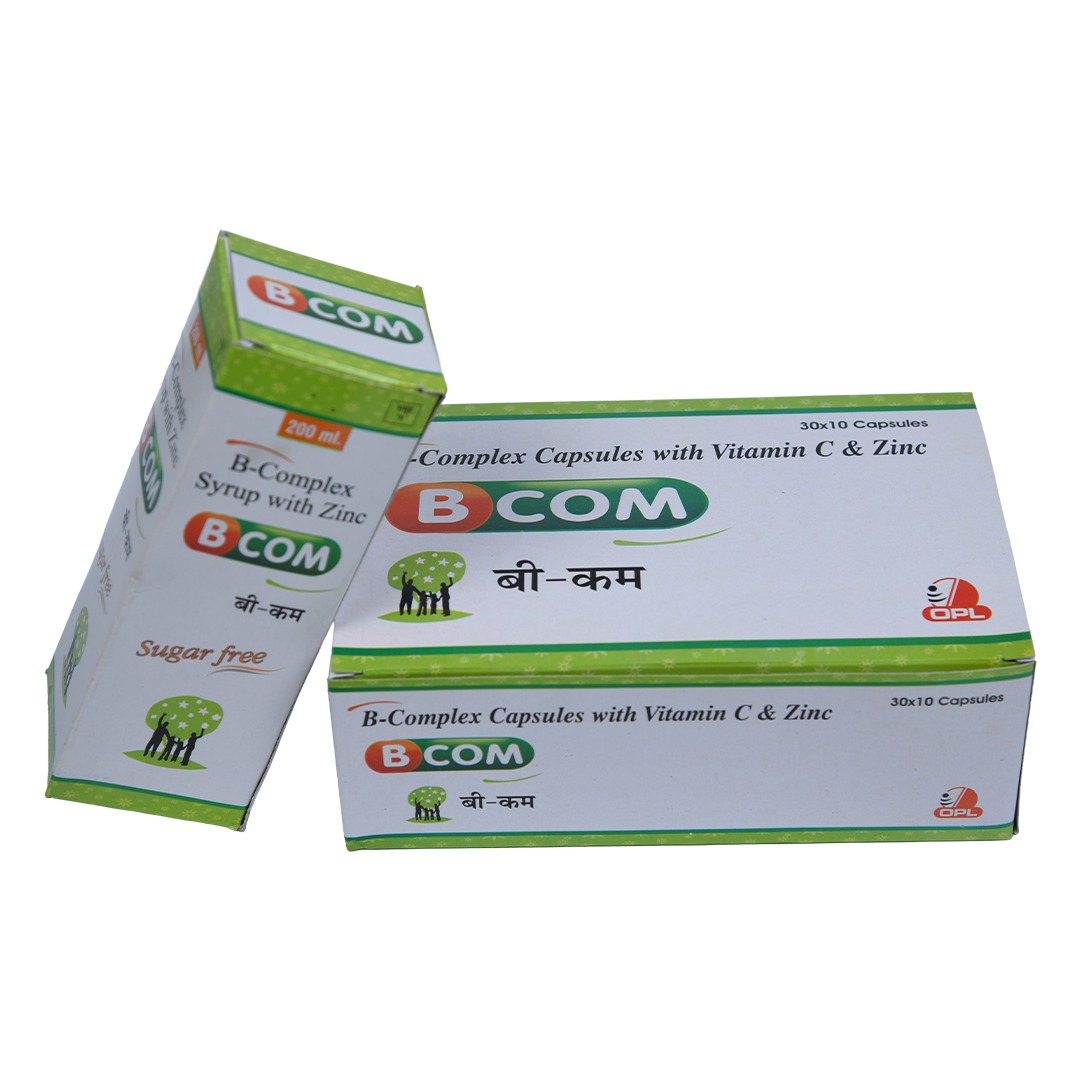
B-COM Capsule
Each capsule contains
- Thiamine Monocitrate (Vit. B1) BP 10 mg
- Riboflavin (Vit. B2) BP 10 mg
- Pyridoxine HCl (Vit. B6) BP 3 mg
- Nicotinamide (Vit. B3) BP 50 mg
- Cyanocobalamin (Vit. B12) BP 15 mcg
- Zinc Sulphate Monohydrate BP 60 Mg
- Calcium Pantothenate (Vit. B5) BP 5 mg
- Ascorbic acid BP 150 mg
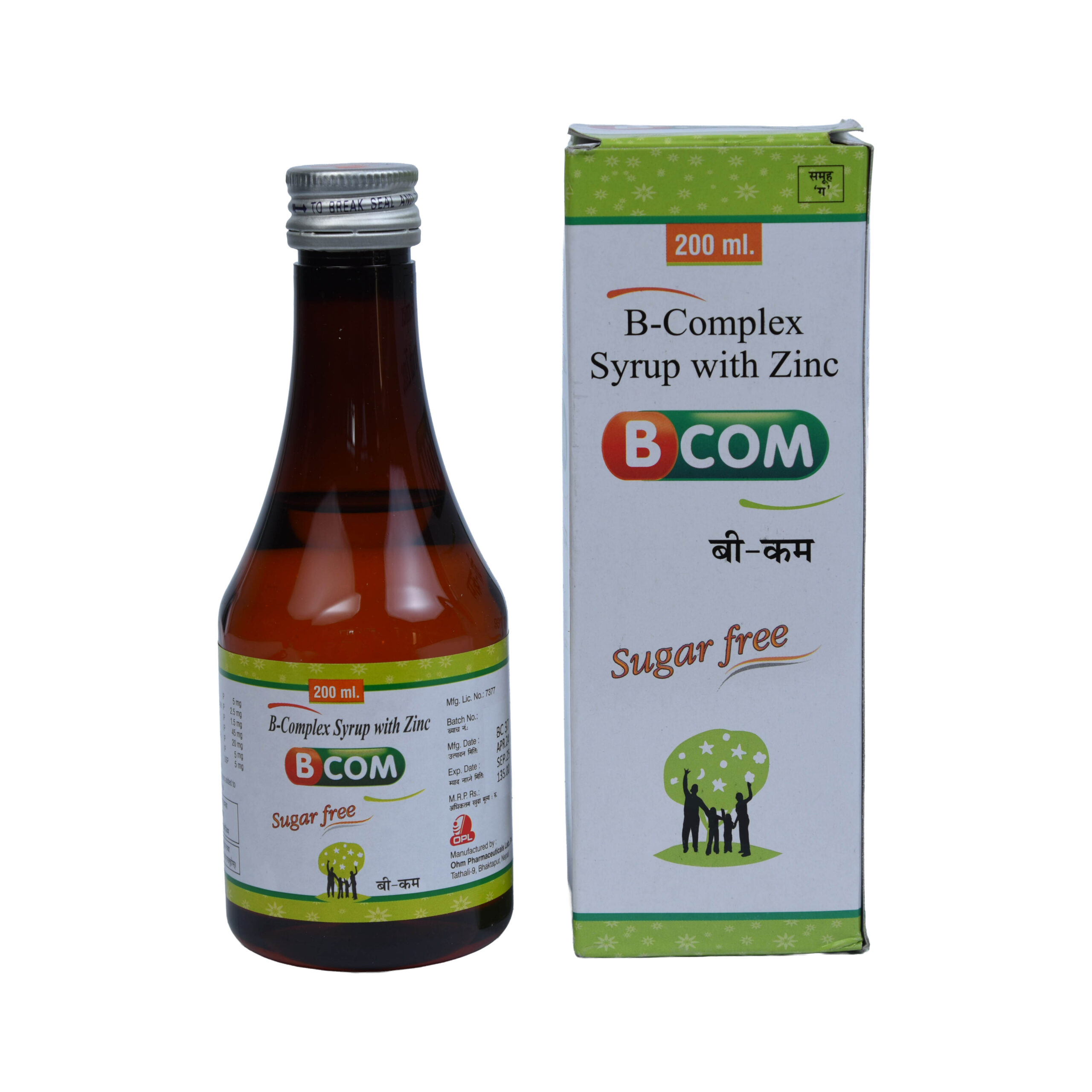
B-COM Suspension
Each 5 ml contains
- Thiamine HCl (Vit. B1) BP 5 mg
- Riboflavine Sod. Phosphate (Vit. B2) BP 5 mg
- Pyridoxine HCl (Vit. B6) BP 5 mg
- Nicotinamide (Vit. B3) BP 45 mg
- Zinc Sulphate Heptahydrate BP 20 mg
- Cyanacobalamin (Vit. B12) BP 5 mcg
- Dexapenthol (Vit. B5) USP 5 mg
|
| Therapeutic Category: |
Vitamin
|
| B-COM Tablet: |
B-COM Tablet: Available in the pack size as 10 tablets X 30 blisters
B-COM Syrup: Available in 200 ml bottle
|
What is Bcom and
what is it used for?: |
Bcom contains Vitamin B complex mg in capsule and suspension form. It is used in
- Treatment of conditions associated with deficiency of certain B-Complex vitamins, such as severe infections, injuries, burns old age, beriberi , convulsions etc.
- It is used as an adjunct in antibiotic therapy.
- Pregnancy and breastfeeding
- Mental depression
- High blood pressure and chronic cardiovascular diseases
|
| How does it work?: |
Bcom play a vital role in maintaining good health and well-being. As the building blocks of a healthy body, B vitamins have a direct impact on your energy levels, brain function, and cell metabolism.
|
| How to take Bcom?: |
Route of administration: Oral
- Adult: 2-4 capsule per day
- Children under 10kg: 1 teaspoonful (5 ml) 1 to 2 times daily or as directed by the physician.
- Children (10-30kg): 2 teaspoonful (10 ml) 1 to 3 times daily or as directed by the physician.
- Adults & Children over 30kg: 2 teaspoonfuls (10 ml) 2 to 3 times daily or as directed by the physician.
Take this medication regularly in order to get the most benefit from it. To help you remember, take it at the same time each day.
|
| What if you miss a dose?: |
Take this medication regularly in order to get the most benefit from it. To help you remember, take it at the same time each day.
|
| What if you miss a dose?: |
Take this medication regularly in order to get the most benefit from it. To help you remember, take it at the same time each day.
|
| What to do in case of overdose?: |
You’re unlikely to get too much vitamin B if you’re taking any supplementation as directed. That said, overdose is possible — especially if you’re taking a supplement without receiving a deficiency diagnosis from your doctor. Symptoms of a vitamin B complex overdose include: excessive thirst, skin conditions, blurry vision, abdominal cramps, nausea and vomiting, increased urination, diarrhea, skin flushing.
|
What do you need to
know before you take Bcom?: |
Do not take Bcom:
- If you are allergic to any of the ingredients of this medicine
- a high amount of oxalic acid in urine
- iron metabolism disorder causing increased iron storage
- sickle cell anemia
- an overload of iron in the blood
- hemolytic anemia
- an ulcer from too much stomach acid
- a type of stomach irritation called gastritis
- ulcerative colitis
- an inflammatory condition of the intestines
- diverticular disease
- excess iron due to repeated blood transfusions
- decreased blood-clotting from low vitamin K
- increased risk of bleeding due to clotting disorder
|
| Warning and Precautions: |
If you have any of the following health problems, consult your doctor or pharmacist before using this product: diabetes, liver problems, vitamin B12 deficiency (pernicious anemia).
|
| Bcom and other medications: |
Tell your doctor or pharmacist if you are taking, have recently taken or might take any other medicines.
|
Pregnancy, breast-feeding and
fertility: |
If you are pregnant or breast-feeding, you can take Bcom as a daily supplement. It is in fact deemed very important.
|
| Driving and using machines: |
There is no effect of this medication in driving or operating machines.
|
| What are the possible side effects?: |
B-Com has little or no side-effects. Rarely seen side-effects are mild upset stomach or flushing which are usually temporary and may disappear as your body adjusts to this product.
|
For Health Professionals/Researchers/
Students:: |
Mechanism of action:
Thiamine (Vit. B1) plays a central role in the release of energy from carbohydrates. It is involved in RNA and DNA production, as well as nerve function.
Riboflavin (Vit. B2) is involved in release of energy in the electron transport chain, the citric acid cycle, as well as the catabolism of fatty acids
Pyridoxine HCl (Vit. B6): The active form of pyridoxine is pyridoxal 5′-phosphate (PLP) which serves as a cofactor in many enzyme reactions mainly in amino acid metabolism including biosynthesis of neurotransmitters.
Nicotinamide (Vit. B3) plays an important role in energy transfer reactions in the metabolism of glucose, fat and alcohol.
Cyanocobalamin (Vit. B12) is involved in the cellular metabolism of carbohydrates, proteins and lipids. It is essential in the production of blood cells in bone marrow, and for nerve sheaths and proteins
Zinc is needed for the body’s defensive (immune) system to properly work. It plays a role in cell division, cell growth, wound healing, and the breakdown of carbohydrates. Zinc is also needed for the senses of smell and taste
Pantothenic acid (Vit. B5) is involved in the oxidation of fatty acids and carbohydrates.
Ascorbic acid (Vit. C), a water-soluble vitamin and powerful antioxidant helps the body form and maintain connective tissue, including bones, blood vessels, and skin.
|
| Drug Interactions: |
Tell your doctor or pharmacist if you are taking, have recently taken or might take any other medicines. Please tell your doctor if you are taking:
- Other vitamin/nutritional supplements.
This medication may interfere with certain laboratory tests (e.g., urobilinogen, intrinsic factor antibodies), possibly causing false test results.
|