| Generic Name: |
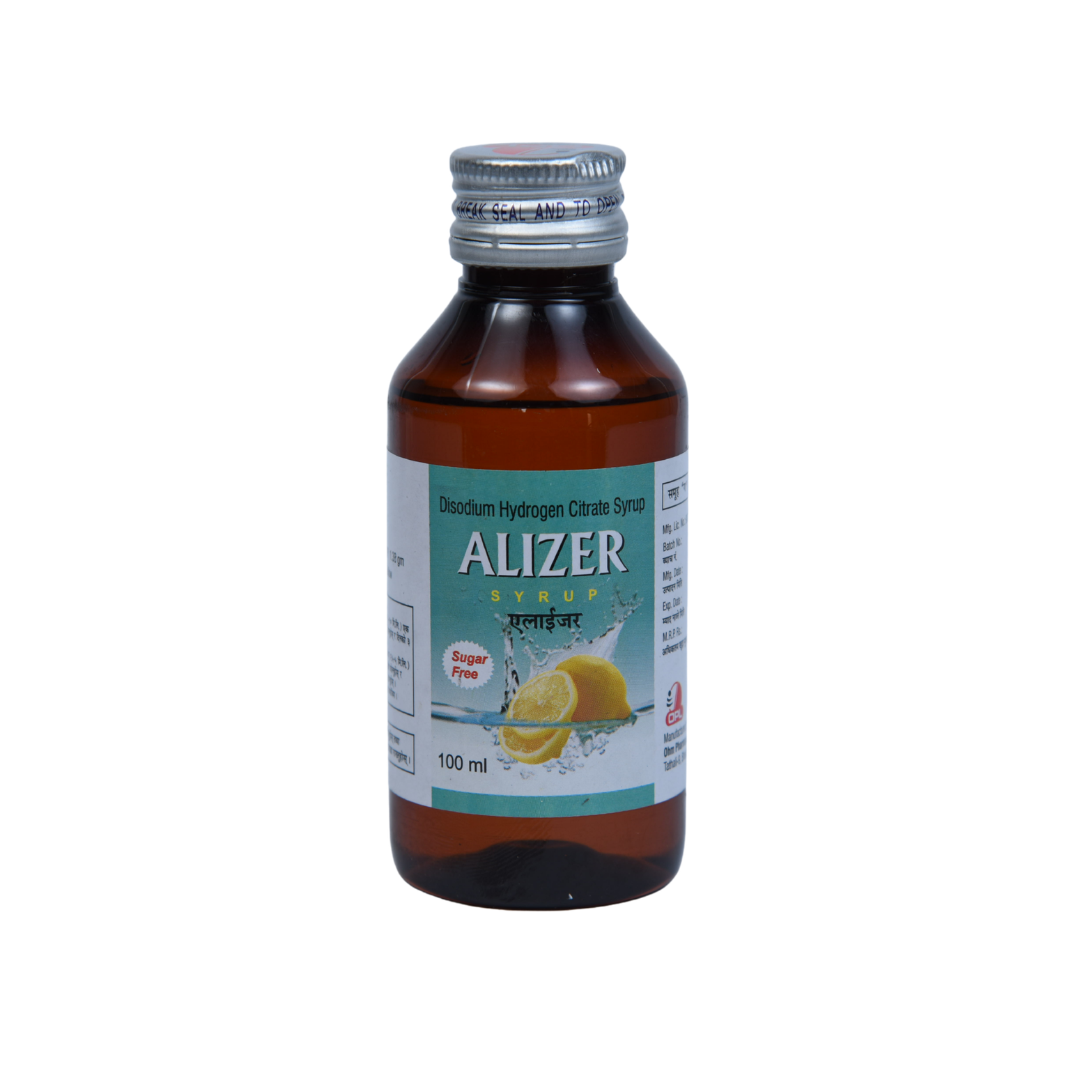
Disodium Hydrogen Citrate
|
| Therapeutic Category: |
Urinary Alkalizer, Systemic Alkalizer
|
| Pharmacological Class: |
Alkalinizing agent
|
| Composition: |
Each 5 ml contains Dihydrogen Sodium Citrate BP 1.38 gm
|
| Pregnancy Category: |
A
|
| Presentation: |
Available in 100 ml bottle with a measuring cap
|
| Mechanism of Action: |
As Urinary Alkalizer
Renal acid-base regulation- Kidneys helps regulating blood pH by secreting H+ and absorbing HCO3-.
- When you take sodium citrate, it moves through your body.
- When it reaches your liver, it is converted to bicarbonate, a usable form of base in the body.
- This helps change the pH in your urinary tract from acidic to more basic.
- By reducing the acidity of the urinary tract, you can experience a reduction in symptoms.
In reduction of stone formation
As an added bonus, citrate can bind with acidic materials in kidneys to prevent calcium oxalate stones from forming.
- A rise in urinary pH increases the solubility of Cysteine in the urine and the ionization of Uric Acid to more soluble urate ion.
- By maintaining alkaline urine, the actual dissolution of uric acid stones may be accomplished.
|
| Indications: |
- Acidosis following diarrhea
- Painful/Burning Micturition* (UTI)
- Renal Tubular Acidosis
- Uremic Acidosis (Hyperuricemia*)
- Kidney stones
|
| Dosage: |
Route of administration: Oral
Adults: 5-10ml three times a day
Children: 2.5-5ml three times a day
Medication to be taken after meals
|
| Pharmacokinetics: |
Absorption: Reaches maximum concentration in 1-2 hours
Metabolism: Citrate is metabolized to bicarbonate in the liver and plays a role as an intermediate in the citric acid cycle
Route of elimination: Largely eliminated through hepatic metabolism with very little cleared by the kidneys
Half-life: 18-54 minutes
|
| Adverse Effects: |
Mild diuresis, stomach cramps, flatulence, diarrhea, GI ulceration, metabolic alkalosis, anxiety, mood swings
|
| Contraindications: |
ALIZER is contraindicated in the following populations and situations:
- Hypersensitivity to any component of the formulation
- Patients on sodium restricted diets
- Hypertension
- Oedema
- Hyperosmolar states
|
| Precautions: |
Hypoventilatory states*, Alkalosis*, Hypocalcaemia*, Neonates, Renal impairment, Cardiac Failure, Hypertension, Pulmonary Oedema, Monitor Serum Electrolytes.
|
| Drug Interactions: |
- Enhances elimination of salicylates and barbiturates
- Additive effect with sodium retention caused by corticosteroids.
- Potentiates renal excretion of tetracycline.
- Hypochloraemic alkalosis* may occur with concomitant Potassium depleting diuretic
|
| Terminologies: |
Micturition: The act of passing urine; urination.
Hyperuricemia: An excess of uric acid in the blood
Hypoventilatory states: Breathing at an abnormally slow rate, resulting in an increased amount of carbon dioxide in the blood.
Alkalosis: An excessively alkaline condition of the body fluids or tissues, which may cause weakness or cramp.
Hypocalcaemia: Deficiency of calcium in the bloodstream.
Hypochloremic alkalosis:A metabolic disorder resulting from an increase in blood bicarbonate level secondary to loss of chloride from the body.
|