| Generic Name: |
Cetirizine HCl
|
| Therapeutic Category: |
Anti-allergy
|
| Pharmacological Class: |
Selective H1 antagonist (Second Generation)
|
| Composition: |
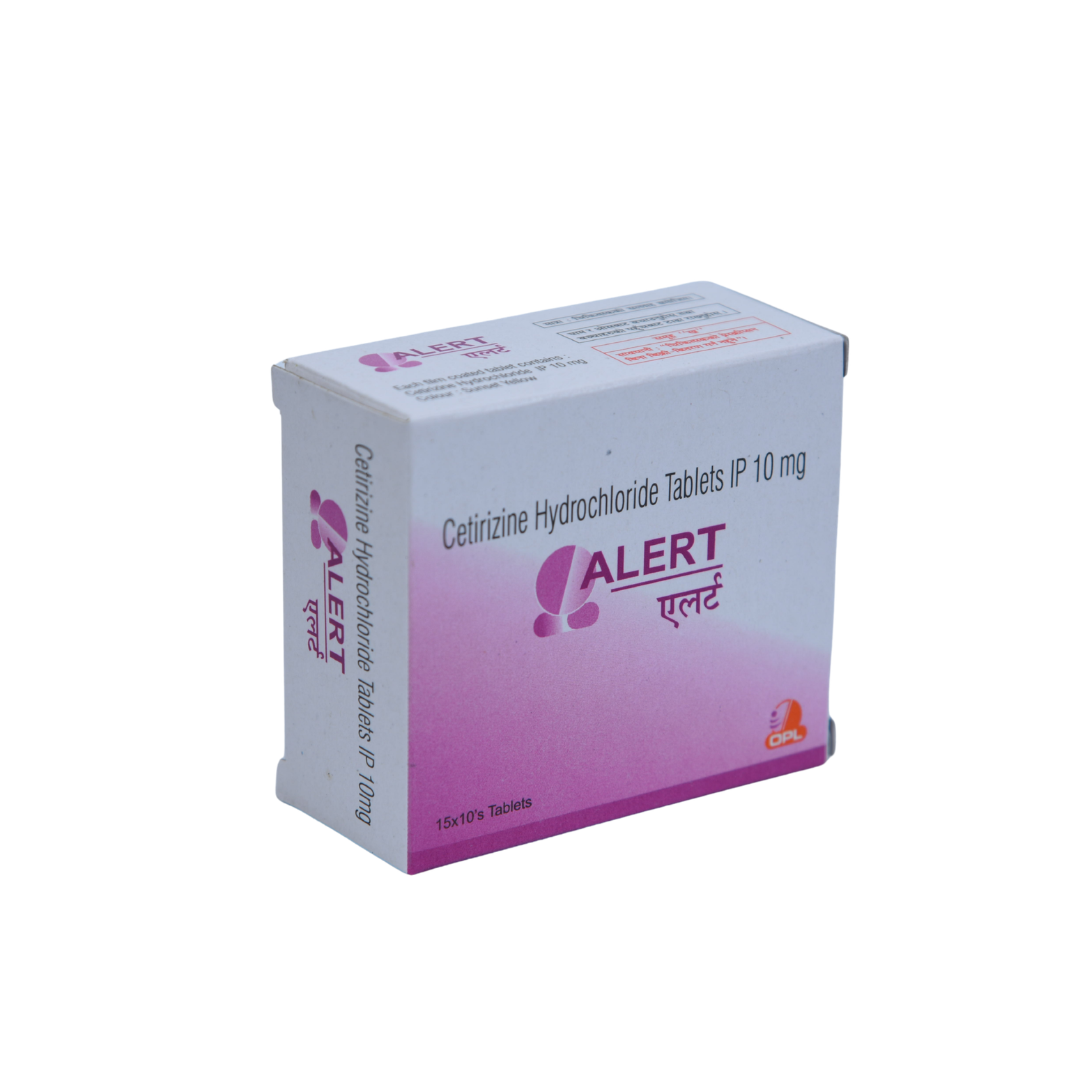
Alert Tablet
Each film coated tablet contains Cetirizine HCl BP 10 mg.
Alert Syrup
Each 5 ml contains Cetirizine HCl BP 5 mg.
|
| Pregnancy Category: |
B
|
| Presentation: |
Alert Tablet
Available in the pack size as 10 tablets X 15 blisters
Alert Syrup
Available in 30 ml with a measuring cap
|
| Mechanism of Action: |
Cetirizine is a non-sedating antihistamine that blocks histamine (H-1) receptors on cells and thus prevents activation of H1 receptor-containing cells by histamine. Unlike the first generation antihistamines, cetirizine and other second-generation antihistamines do not readily enter the brain from the blood, and, therefore, they cause less drowsiness. Cetirizine may cause more drowsiness than other second generation antihistamines.
|
| Indications: |
-
- Chronic Idiopathic Urticaria
- Perennial Allergic Rhinitis (PAR)
- Pollen Allergy
- Seasonal Allergic Rhinitis (SAR)
- Upper respiratory tract hypersensitivity reaction (site unspecified)
- Rhinovirus infection
- Kimura’s Disease*
|
| Dosage: |
Route of administration: Oral
Adult: 10 mg once a day
Child: >6 months and <6 years: 5 mg once daily.
|
| Pharmacokinetics: |
Absorption: Well absorbed with bioavailability >70%
Metabolism: Hepatic (minimum metabolism)
Protein binding: Approximately 88-96%
Route of elimination: Urine (70-85%), Feces (10-13%)
Half-life: 8.3 hours
|
| Adverse Effects: |
Common side effects are: dry mouth, nausea, headache, fatigue, jitteriness*, and sore throat.
Cetirizine may cause more drowsiness than other second generation antihistamines but is less sedative than first generation antihistamines.
|
| Contraindications: |
ALERT is contraindicated in the following situations:
-
- Hypersensitivity to Cetirizine or any of its ingredients
- Urinary retention*
- Closed-angle glaucoma
|
| Precautions: |
-
- While using machinery or carrying our heavy operations, driving
- Patients > 65 years
- Hepatic or Renal impairment
|
| Interactions: |
-
- There is a possibility of a drug interaction between cetirizine and theophylline.
- Any type of tranquilizer, sedative, or sleep aid when taken along with cetirizine may amplify the sedation.
- Avoid alcohol
|
| Terminologies: |
Kimura’s Disease: a benign rare chronic inflammatory disorder which predominantly affects the lymph nodes and soft tissue
|