| Generic Name: |
Cefixime
|
| Therapeutic Category: |
Antibiotic
|
| Pharmacological Class: |
Cephalosporin
|
| Composition: |
Xifim 100 DT
Each dispersible tablet contains Cefixime trihydrate equivalent to anhydrous Cefixime USP 100 mg
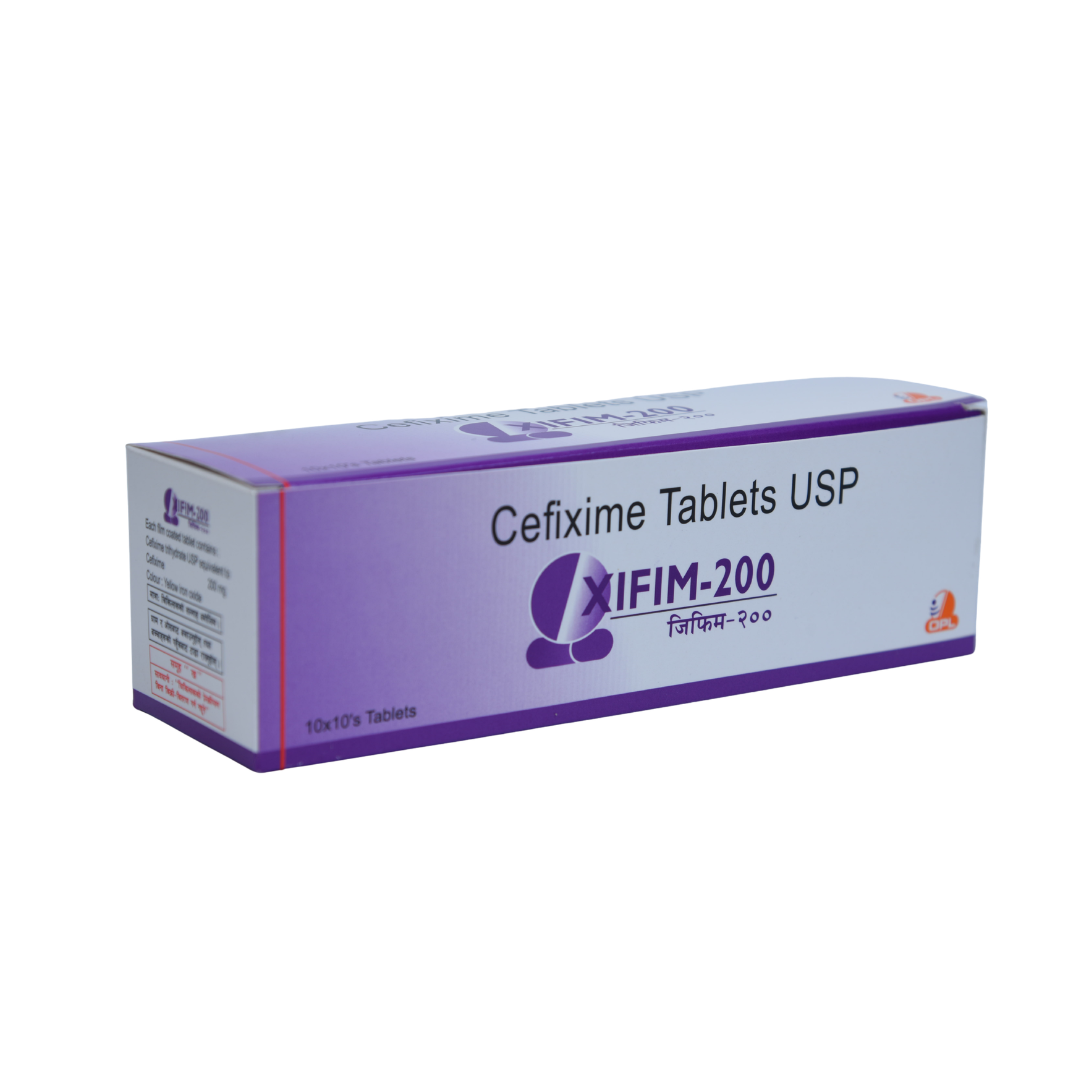
Xifim 200
Each film-coated tablet contains Cefixime trihydrate equivalent to anhydrous Cefixime USP 100 mg
Xifim-RPOS
Each 5 ml of constituted suspension contains Cefixime trihydrate equivalent to anhydrous Cefixime USP 50 mg
|
| Pregnancy Category: |
B
|
| Presentation: |
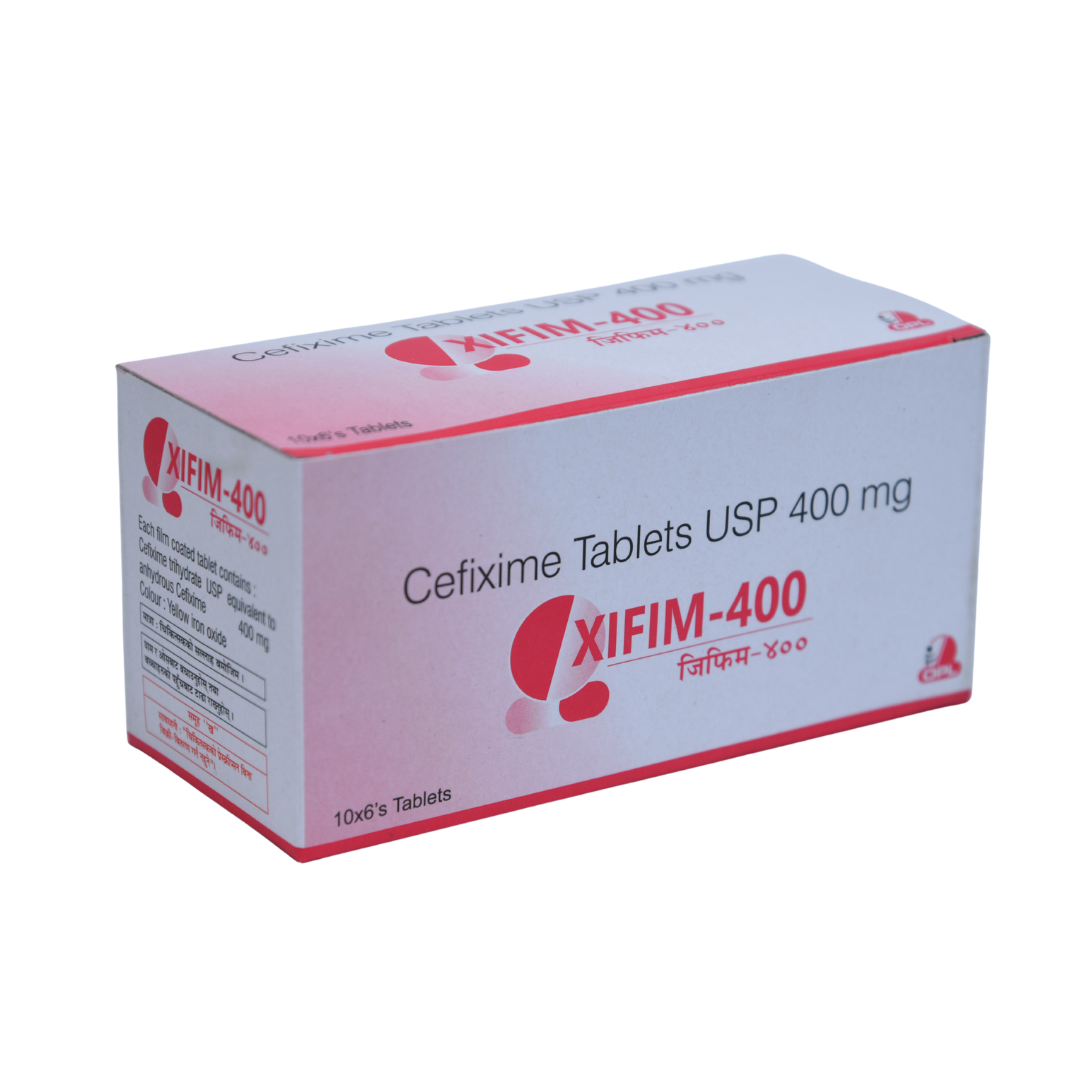
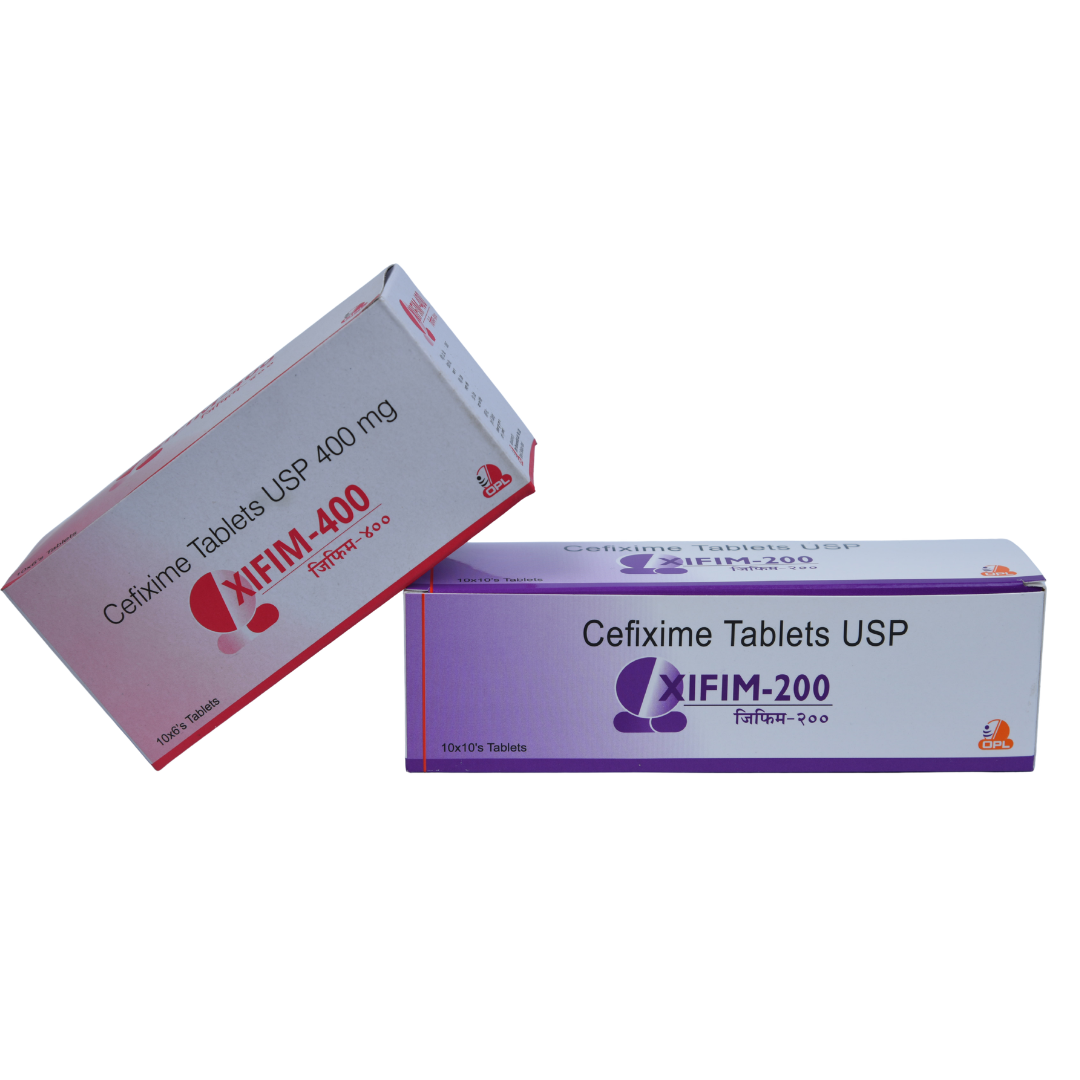
Xifim Tablets
Available in the pack size as 10 tablets X 10 strips
Xifim-RPOS
Available in 60 ml bottle with a measuring cap
|
| Mechanism of Action: |
The bactericidal action of Cefixime is due to the inhibition of cell wall synthesis. It binds to one of the penicillin binding proteins (PBPs) which inhibit the final transpeptidation step of the peptidoglycan synthesis in the bacterial cell wall, thus inhibiting biosynthesis and arresting cell wall assembly resulting in bacterial cell death.
|
| Indications: |
- Ear: Otitis caused by Haemophilus influenzae, Moraxella catarrhalis and Streptococcus pyogenes.
- Sinuses: Sinusitis.
- Throat: Tonsillitis, pharyngitis caused by Streptococcus pyogenes.
- Chest and lungs: Bronchitis, pneumonia caused by Streptococcus pneumoniae and Haemophilus influenzae.
|
| Dosage: |
Route of administration:Oral
Otitis media: 400 mg/day in single daily dose or divided 12 hourly.
Pharyngitis/Tonsillitis: 400 mg/day in single daily dose or divided 12 hourly.
|
| Pharmacokinetics: |
Absorption: About 40%-50% absorbed orally whether administered with or without food.
Protein binding: Approximately 60 %
Metabolism: Hepatic
Route of elimination: Renal and Biliary
Half-life: 3-4 hours
|
| Adverse Effects: |
- Very common: Diarrhea
- Common: Abdominal pain, dizziness, dyspepsia, fever, flatulence, headache
|
| Contraindications: |
Xifim is contraindicated in:
- Hypersensitivity to Cephalosporin class of antibiotics
|
| Precautions: |
- Caution in patients with history of Kidney disease
- This medication may cause false positive results with certain diabetic urine testing products (cupric sulfate-type). This drug may also affect the results of certain lab tests. Make sure laboratory personnel and all your doctors know you use this drug.
|